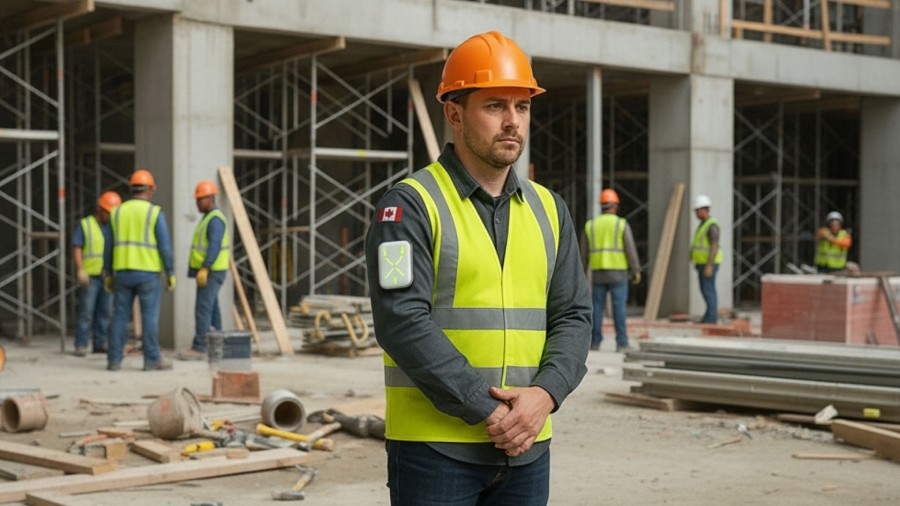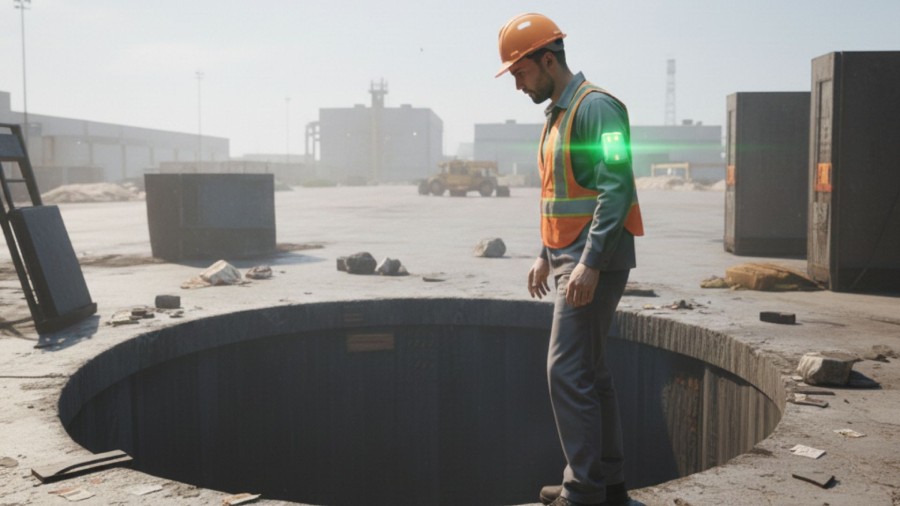


Accidents are not inevitable, whether prevention gets smarter. Closafe spearheads the new generation of predictive safety with the intersection of cutting-edge sensor-based monitoring and real-time data analytics. It identifies anomalies in worker movement, light, and impacts before they turn into injury cases. By integrating intelligence into apparel, Closafe makes industrial settings shift from being reactive to proactive. The outcome is a more intelligent, secure, and data-informed workplace in which technology does not only react, it anticipates. Predictive safety in Canada’s changing industrial landscape isn’t merely innovation, it’s an ethical and operational imperative.
Turning Data into Early Warnings
Traditional safety measures depend on human surveillance and reaction after an incident. Closafe, however, employs predictive safety measures to indicate potential threats before they ever occur. Equipped with inbuilt sensor-based monitoring for monitoring, the system is always observing motion, balance, and environment. When noticing even slight deviations in position, sudden braking, or low light levels, Closafe processors react immediately with alarms to staff and managers. This proactive process facilitates real-time intervention, cutting response time by orders of magnitude. The technology that supports the process is machine-learning anomaly detection algorithms, which monitor patterns potentially overlooked by human interpreters. Through data-driven optimization, Closafe improves with each incident recorded, becoming more accurate each day. In hazardous industries like construction, mining, and heavy industry, this ability makes safety management a proactive function rather than a reactive one in which predictive safety removes uncertainty, improves coordination, and saves lives.
The Science Behind Smart Sensors
The brains’ power in Closafe is through its engineering. Each item of clothing has a web of tiny accelerometers, gyroscopes, and light sensors calibrated to sample at rates high enough to keep pace with nerve impulses. The sensor-based monitoring system mimics a biological nervous system, reporting continuously the wearer’s state and environment. The sensors apply the same physical phenomena applied in aerospace navigation: sensing acceleration, orientation, and vibration to compute spatial awareness. Supplemented by onboard microcontrollers, these parts locally process data, providing real-time response in the event of lost external connectivity. Applying this technology to fabric involves accuracy engineering, power efficiency optimization, heat management, and signal stability. Multi-sensor fusion doubles detection accuracy up to 35%, an industry standard incorporated into Closafe’s performance metrics. In industrial settings in Canada, where demanding conditions and the extremes of temperature push all machinery to its limits, the system’s reliability and precision reaffirm it as the technology foundation of predictive safety.
AI-Enhanced Decision Making
Data by itself is mere noise until there’s intelligent interpretation. Closafe translates its streams of data into predictive intelligence based on in-built AI algorithms. These models decipher real-time measurements from sensor-based monitoring to detect nascent threats, such as repetitive strain patterns, micro-vibration indicators of equipment strain, or body-orientation changes that denote dizziness or loss of unconsciousness. The predictive safety engine uses adaptive thresholds that adapt to each user’s activity profile, an aspect based on statistical process control theory. In turn, predictive safety gets dynamic and individualized, providing context-sensitive alerts rather than generic warnings. The human-machine cooperation suppresses false positives while keeping high sensitivity to actual threats. In reality, the supervisor gets actionable alerts rather than raw data, simplifying complexity into clarity. Intelligent automation of the sort resonates with the design principles of the cyber-physical system, wherein the computation and physical process function in continuous feedback. In AI-enriched interpretation, Closafe not only saves but also educates organizations how to foretell and avoid future threats.
Comfort, Compliance, and Intelligence
Safety technology can only be successful when the worker trusts and embraces it. Closafe puts human comfort at the forefront of predictive safety innovation. The module sensors in the system are light in weight, thermally neutral, and integrate into breathable garments designed to control airflow and moisture. These ergonomically-driven concerns ensure that sensor-based monitoring devices in no way hamper the worker’s motion range or stamina. Psychological studies of technology acceptance in high-risk environments verify that comfort positively impacts compliance rates, uncomfortable equipment all too often causes inconsistent usage. By removing that roadblock, Closafe facilitates consistent protection with no loss of productivity. Furthermore, the low-maintenance requirements of the system, the automatic lighting, as well as wireless transmission of the data, reduce workers’ cognitive load. This integration of physical comfort and digital intelligence assumes the aspect of the principle of passive safety enhancement: the end-user enjoys permanent protection without having to intervene. As a consequence, acceptance of the predictive safety becomes an organic extension of daily workflow, rather than an enforced rule.
A Connected Future for Canadian Industry
Canada’s industrial foundation is racing towards smart infrastructure, data-led operations, and sustainability. Closafe has a consolidating role in this direction, interconnecting human intelligence and technological automation. With sensor-based monitoring integration in protective wear, Canadian companies can now manage multiple job sites simultaneously, correlating the safety data across operations. This allows predictive modeling at micro and macro levels, determining local threats to individuals and general inefficiencies in premises. At a larger scale, predictive safety, this networked interface helps address national guidelines like the Canadian Centre for Occupational Health and Safety (CCOHS). Much more importantly, it is supporting Canada’s target of no workplace fatalities through smarter prevention. With businesses expanding in the fields of energy, manufacturing, and construction, Closafe gets safety moving ahead with technology and not behind it. This is what leads us toward a nationwide shift toward a future where human well-being and innovation are inseparable.
Conclusion
Closafe is the embodiment of pro-active industrial safeguarding, fusing sensor-based monitoring accuracy with predictive safety awareness. Its design philosophy merges scientific rigor with ergonomic sensitivity and therefore makes it both as simple to use and as advanced as possible. Through real-time analysis of environmental data and human behavior, it allows organizations to predict, prevent, and protect with hitherto unattained precision. This is not merely technology, it’s a responsive ecosystem that adjusts to every passing moment, strengthening Canada’s industrial backbone. By innovation, vision, and insights, Closafe redefine the phrase ‘keeping workers safe,’ turning prevention into science and safety into culture.