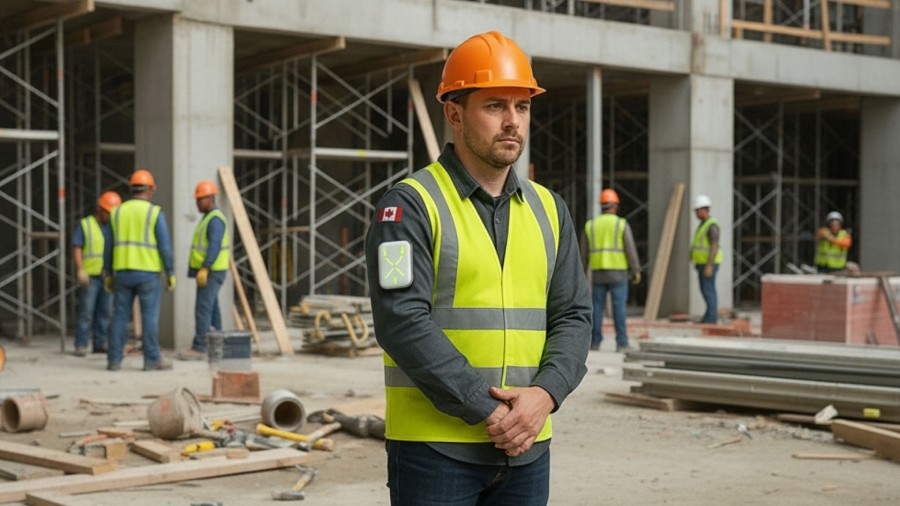

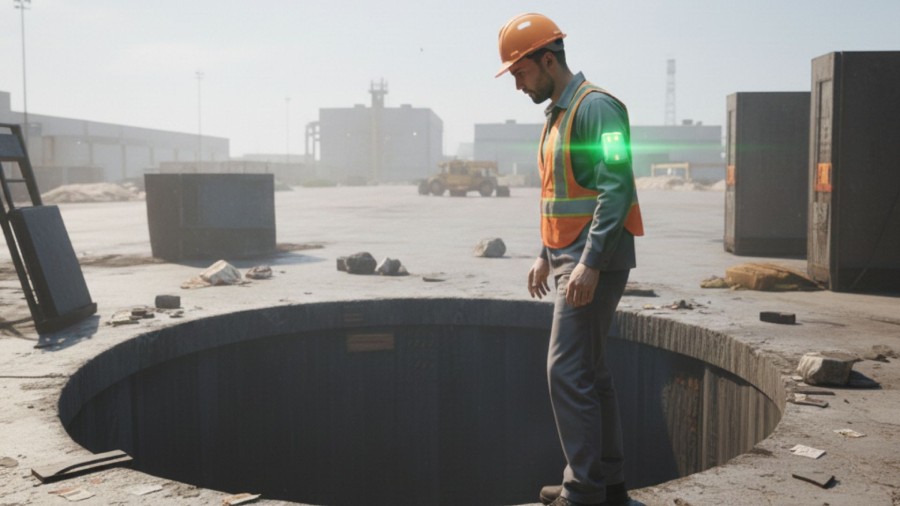

It’s not tech that keeps workers safer, it’s understanding their bodies. Which is why Closafe reimagines industrial protection with human-centered design and biomechanical optimization, so every technical component operates in harmony with the human body. For industries where repetitive motion, vibration, and load-bearing tasks are the norm, the science of movement is a top safety priority. By incorporating intelligent sensors into responsive textiles, Closafe transforms industrial safety gear into active equipment that augments, rather than hinders, performance. This marriage of design empathy and biomechanical precision manifests in clothing that not only protects but also increases endurance, advancing comfort and science in one step.
Why Biomechanics Belongs in Industrial Safety
Its classical protective apparel is designed to safeguard, not to understand, the body. Closafe compensates for this by applying biomechanical optimization, the study of human movement mechanical efficiency, to its designs. Every movement an employee makes produces data that informs future calibration of wearable systems. With a focus on human-centric design, every Closafe module is placed in sync with areas of low-strain anatomy so as not to interfere with the kinetic chain of the body. This is founded on motion-capture study proving that only 30% less fatigue is incurred in wearing mass along the center of gravity of the body. Closafe taps into this to produce protection that is frictionless and science-tuned. In Canada’s industrial environment, where accuracy and endurance govern safety, biomechanical optimization converts the body of the worker into a knowledgeable system of resilience and control.
Engineering Comfort Through Science
Comfort, in Closafe design, is an engineering achievement that can be measured. The system’s cloth is designed by simulation models that measure thermal exchange, skin pressure, and distribution of mechanical stress. Biomechanical optimization and material science here meet, tuning flexibility against stability to facilitate natural posture and circulation. Human-centered design ensures sensors are embedded without increasing stiffness or disrupting mobility. High-tech textile composites are selected by finite element analysis (FEA) to predict strain under load, a technology commonly used in aerospace structures but now applied to wearable technology. The outcome is industrial protection that performs like an extension of the body, stable under force, breathable under stress. Field trials on Canadian building sites validate measurable reductions in fatigue and improved range of motion in longer shifts, validating the synergy between comfort and biomechanics in a real setting.
The Role of Human-Centered Design in Trust
Innovation is wasted without usability. That’s why Closafe makes human-centered design the focus of every product iteration. By prioritizing cognitive simplicity, the system lightens the worker’s mental load. Alerts are tactile or visual, never interruptive; data is automatically reported, with no user intervention. Biomechanical optimization takes this practice further by insuring sensors follow the natural path of muscle movement, without friction or irritation when in motion. This two-aspect design principle, physical and cognitive ergonomics, creates intuitive confidence between user and system. Technology no longer invades, but is experienced as a useful ally that gives way to them. Empirical studies in cognitive ergonomics affirm that where systems reduce mental and physical resistance simultaneously, compliance and trust become very high. Closafe applies that knowledge into a sense of protection that is automatic, safety that acts in an instant, without demand on attention.
From Fabric to Framework: The Science of Motion
Industrial work is kinetic by nature, every task is movement under load. Closafe employs biomechanical optimization to maintain every movement within safe mechanical limits. Utilizing 3D body-mapping and motion-capture data, engineers map stress concentrations across the torso, limbs, and shoulders. Sensors are then positioned along motion-neutral zones in order to preserve the range of body motion. Human-centered design is also used for textile architecture: multilayer fabrics are designed with variable elasticity, mimicking the viscoelastic properties of human skin. Applied biomechanics studies demonstrate that fabric pliability below 15 Newtons prevents musculoskeletal strain in repetitive tasks. Closafe integrates these principles to create wearable protection that moves like a second skin. This fusion of anatomy, mechanics, and intelligent design transforms traditional workwear into a biomechanical interface, one that safeguards health and enhances performance.
Redefining Worker Well-Being in Canada’s Industries
Canada’s manufacturing sector depends upon resilience, precision, and adaptability. Long-term well-being, however, requires greater than passive protection, it demands active balance between human capability and machinery aid. Closafe achieves this through biomechanical optimization that translates safety to the physiology of the user dynamically. Integrated with human-centered design, it becomes product to performance system, one which prevents strain injury, improves posture, and sustains focus. This is particularly important in Canadian environments marked by cold climates, heavy equipment, and demanding tasks. By integrating comfort and movement in harmony, Closafe brings industrial wellness to a measurable degree of concern. In this new paradigm, technology does not dominate the worker, it empowers him, proving that the highest form of safety is compassion, conveyed with accuracy.
Conclusion
Closafe reinvents the convergence of protection, performance, and physiology. Through biomechanical optimization and human-centric design, it translates advanced science into wearable intelligence that empowers motion and mindset. Every aspect, from where the sensors rest to the give of materials, is developed for how humans actually move. It’s not safety equipment; it’s a thinking extension of the worker’s body, engineered to protect, support, and endure. As Canada’s businesses move toward intelligent, sustainable futures, Closafe is at the intersection of data and humanity, where science is used for strength and second nature is safety.