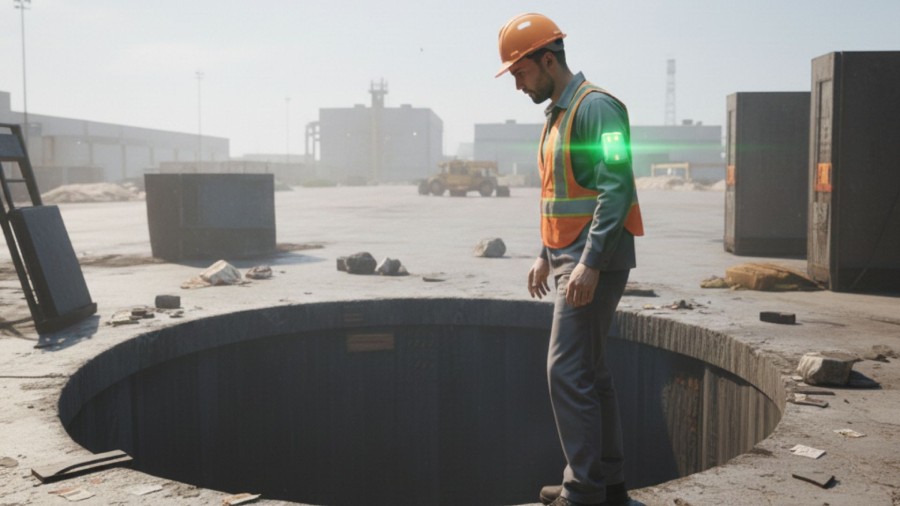

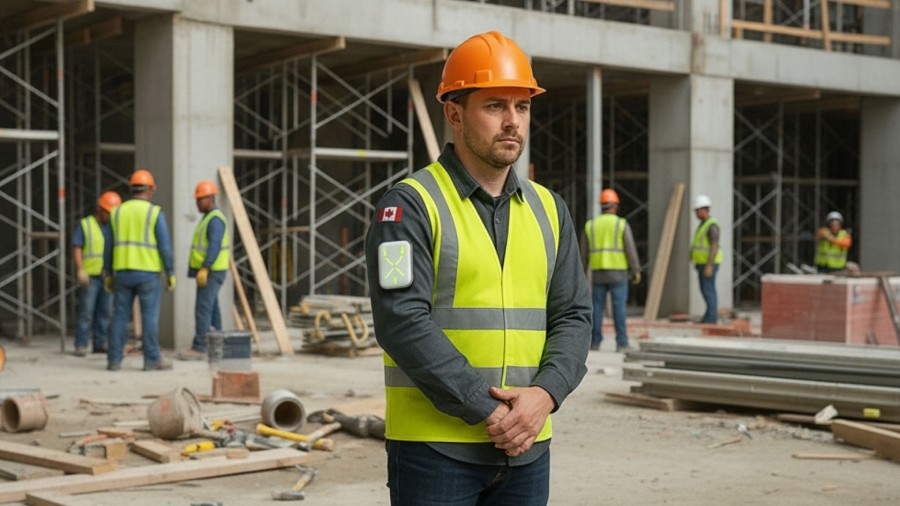

Technology alone cannot make employees safer; knowledge of their body does. Closafe reimagines industrial safety as human-centered design and biomechanical optimization where each technical component is designed to cooperate with the human body. Where repetitive motion, vibration, and load-carrying tasks are routine procedures, the physics of movement become the deciding factor of safety. Through the insertion of smart sensors in adaptive fabrics, Closafe transforms safety industrial wear into adaptive gear that improves, rather than limits, performance. This integration of design empathy and biomechanical precision results in clothing that not only protects but amplifies stamina, combining comfort and science in one step to the next level.
Why Biomechanics Belongs in Industrial Safety
Traditional protective equipment protects the body but disregards it. Closafe bridges this gap by applying biomechanical optimization, the study of mechanical efficiency in human movement, to its product. With every movement a worker performs, there is feedback that can be utilized in subsequent calibration of wearable systems. In human-centered design, every module for Closafe is placed in conformity with low-strain anatomical positions, disrupting the kinetic chain of the body as little as possible. This is founded on motion-capture studies that prove wearing mass equated along the center of gravity of the body reduces fatigue by up to 30%. Closafe captures these philosophies in a way that makes protection seamless and science-tuned. In the industry spaces in Canada, where precision and endurance determine safety, biomechanical optimization sharpens the body of the worker as an informatics system of resilience and control.
Engineering Comfort Through Science
Comfort, in the design of Closafe, is an engineering outcome that can be measured. The system’s fabrics are engineered through simulation models that measure thermal transfer, skin pressure, and mechanical stress distribution. This is where biomechanical optimization meets material science, treading a tightrope between flexibility and stability to maintain natural posture and circulation. Human-centered design ensures sensors are incorporated without introducing stiffness or restricting mobility. More advanced textile composites are selected using finite element analysis (FEA) to predict strain on loading, a method historically employed in the aerospace industry but now applied with wearable technology. The outcome is industrial protection that behaves as an extension of the body, stable under load, breathable under stress. Experimental field trials on Canadian construction sites confirm measurable reductions in fatigue and increased motion extent towards the close of long shifts, supporting the compatibility of comfort with biomechanics under real operating conditions.
The Role of Human-Centered Design in Trust
Wasted innovation is innovation that isn’t usable. Which is why human-centered design is at the forefront of every product iteration at Closafe. By emphasizing cognitive simplicity, the system minimizes the worker’s mental load. Alerts are visual or haptic, not interruptive; data is transferred automatically, with no user interaction. Biomechanical optimization helps along by aligning sensors with the natural way to move muscles, instead of introducing friction or irritation with motion. This double design principle, physical and cognitive ergonomics, creates intuitive trust between user and system. Technology is no longer something employees feel intrusive, but a partner that adapts to them. Empirical evidence in cognitive ergonomics confirms that when systems reduce mental and physical resistance simultaneously, compliance and trust levels increase significantly. Closafe translates that understanding into an experience of safety that is effortlessness, timely protection, without needing attention.
From Fabric to Framework
Industrial work is kinematic in nature, movement with load is inherent in all tasks. Closafe applies biomechanical optimization to maintain all movements in safe mechanical ranges. 3D body-mapping and motion-capture technologies are used by engineers to sense stress concentrations in the torso, limbs, and shoulders. Sensors are used along motion-neutral paths to preserve the range of motion of the body. Human-centered design is transferred to textile architecture: layered fabrics are tuned with elasticities that change, mimicking the viscoelastic nature of human skin. Biomechanics studies applied to garments indicate that maintaining fabric flexibility below 15 Newtons prevents musculoskeletal fatigue during repetitive work. Closafe leverages these findings to create wearable protection that bends like a second skin. This fusion of anatomy, mechanics, and intelligent design transforms traditional workwear into a biomechanical interface, one that protects health and enhances performance.
Redefining Worker Well-Being in Canada’s Industries
Canada’s industries depend on endurance, precision, and adaptability. Long-term success, however, demands more than protective response, it demands proactive synergy between mechanical support and human potential. Closafe does this through biomechanical optimization, dynamically aligning protection to the physiology of the worker. Coupled with human-centered design, it is transformed from more than a product to a performance ecosystem, one that eradicates strain injuries, improves posture, and sustains concentration. This is particularly important in Canadian work environments with cold climates, heavy machinery, and intensity of tasks. By engineering comfort and movement together, Closafe elevates industrial well-being to a measurable standard of care. In this new paradigm, technology doesn’t constrain the worker, it frees them, proving the ultimate form of safety is empathy, delivered through precision.
Conclusion
Closafe reimagines the convergence of protection, performance, and physiology. Through biomechanical optimization and human-centered design, it translates bleeding-edge science into wearable intelligence that services both motion and mindset. Each aspect, from sensor placement to material flexibility, is engineered for how humans actually move. This is not safety equipment; it is an intelligent extension of the worker’s body, engineered to protect, assist, and endure. As Canada’s industries speed toward smarter, more sustainable futures, Closafe stands at the intersection of data and humanity, where science is the muscle, and safety is second nature.