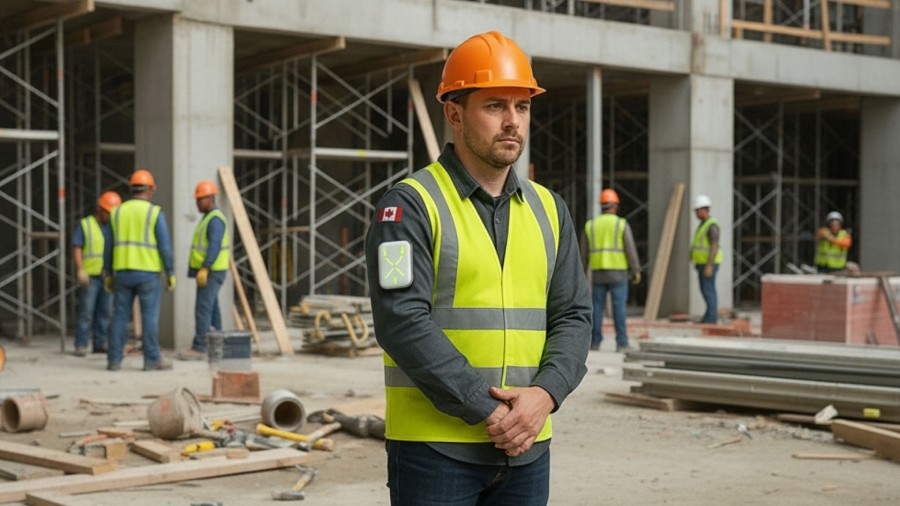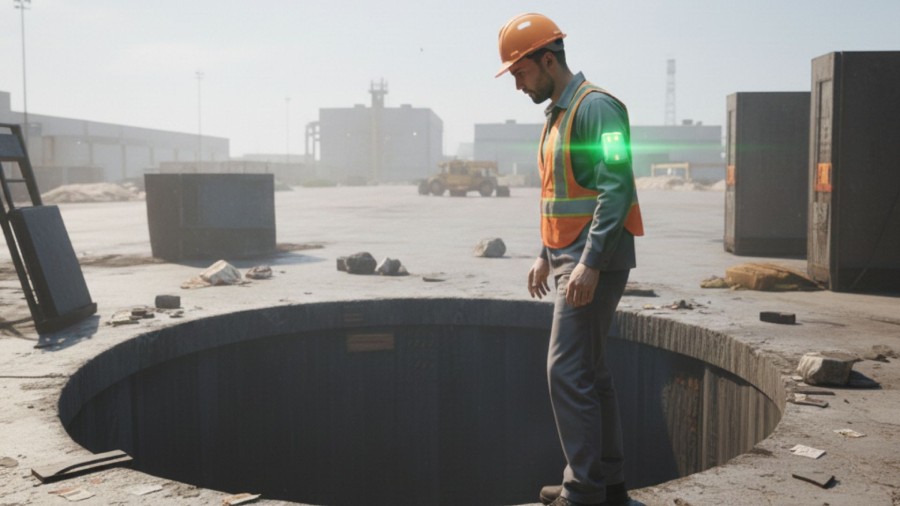

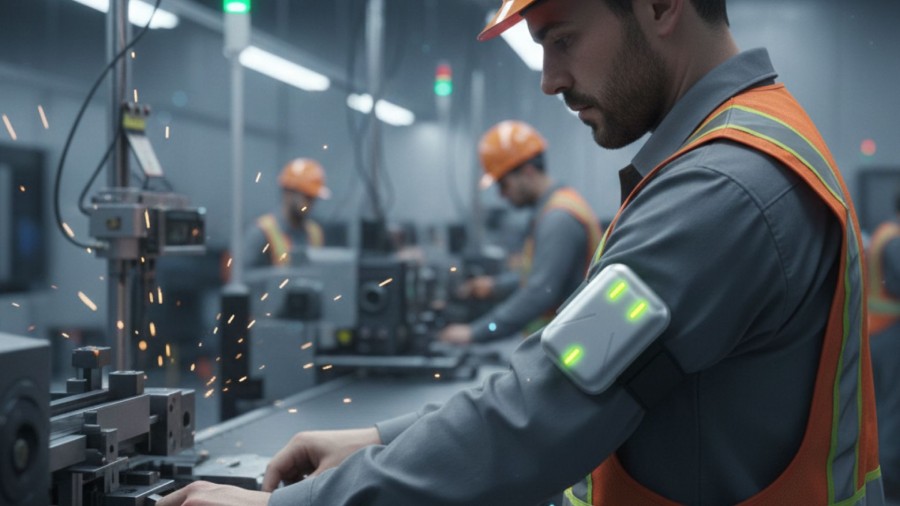

In factories where hazards abound, Closafe offers a path-breaking safety solution in the form of smart workwear. The technology integrates various wearable safety sensors into daily wearables in order to create a Personal Safety System (PSS) that can sense in real-time and prevent hazards in advance. Unlike traditional safety gear that provides only post-incident protection, Closafe prevents them by scanning environment and body inputs continuously. By making the design of the system IoT-enabled, workers can benefit from seamless connection with safety command centers, and the workplace can benefit by experiencing enhanced responsiveness and compliance with the Canadian workplace safety law. In the context of the digitalization being undertaken by Canadian industries, Closafe is an important step toward an industrial safety culture that is sustainable, data-driven, and safer.
Redefining Protection Through Smart Integration
Conventional protective gears offer only passive protection. Closafe, with the integration of IoT and real-time sensory inputs, actively prevents accidents. Its internal accelerometers, gyroscopes, and light sensors are always keeping track of motion, impact, and light. For instance, at ambient light levels below 100 Lux, automatic lamp illumination takes place, providing constant visibility and avoiding falls. This smart workwear integration converts attire into a smart watchman that is able to detect prospective danger prior to being even more dangerous. Technically, these sensor-based systems utilize principles of accelerometry and photometry to precisely monitor environmental parameters (CSA Group, 2024).
Addressing Critical Safety Gaps in Industrial Workplaces
Canadian workplace safety is beset with chronic problems: loose garments wrapping around machinery, blow-type injuries, and delayed emergency response. Closafe’s collar or sleeve closure sensor detects unfastened collars or sleeves, one of the most common but overlooked dangers. The impact sensor and loss of consciousness modules alert supervisors to react in seconds following an accident, allowing for rapid intervention. By converting the human error into a preventable element, this smart workwear bridges the gap between machinery protection and human behavior, meeting ISO 45001 industrial safety standards at the center of industrial safety systems.
Data-Driven Insights for Continuous Improvement
In addition to real-time alerts, Closafe revolutionizes safety management by way of analytics. The platform collects incident data across workplace job sites, uncovering risk trends and enabling companies to create superior prevention plans. These findings also aid compliance reporting against Canada’s Occupational Health and Safety Regulations (OHSR). Technically, the practice is an implementation of the feedback-loop model in cybernetics, wherein ongoing monitoring and corrective adjustment deliver an optimized system. Ultimately, for managers, the end result is analytical intelligence that raises the efficiency of operations while solidifying industrial safety at the systemic level.
Comfort and Usability as Engineering Priorities
Engineering safety clothing usually sacrifices comfort, but Closafe makes this compromise a joke. With its light, ergonomic construction, workers are free to move naturally without adding extra fatigue to extended working periods. Research into wearable sensor ergonomics indicates that the minimization of device weight to below 5% of clothing weight supports natural movement (Journal of Ergonomic Science, 2023). Concentration on user comfort generates greater worker compliance rates, which are a major factor in the success of industrial safety systems. The immediate comfort and protection of smart workwear set it apart from standard PPE as it stimulates protection and performance.
A New Benchmark for Canadian Industrial Safety
Canada’s safety apparel market is growing exponentially as regulators and consumers become more concerned with safety. Closafe derives advantage from this growth through establishing a new standard for integrated, networked protection. Its combination of real-time location identification, IoT connectivity, and data analytics is a template for the next generation of industrial safety standards. With industries transforming into smart and automated infrastructure, smart workwear such as Closafe adapts with nation-level agendas on workers’ welfare, sustainability, and technology leadership.
Conclusion
The future of industrial safety in Canada is embodied by Closafe, an age in which prevention leads response. Through the integration of sensor technology, data intelligence, and user-focused design, smart workwear rediscovers the way safety is conceptualized and delivered. The technology prevents injuries, as well as enables organizations to establish predictive safety cultures based on science and ethics. By continuous innovation, Closafe can render disabling injuries obsolete and solidify Canada’s leadership in workplace safety technology.